

Best English Half Pads for Horses
Michelle DrumChoosing the right half pad for your horse can feel overwhelming, especially when every option promises better fit, better comfort, or better performance. In reality, the best half pads for horses are designed to add the right kind of support for your horse, your saddle, and the work you’re doing together.
Whether you’re looking to improve shock absorption, fine-tune saddle balance, or support a sensitive or changing topline, understanding how half pads work (and when they’re actually useful) makes all the difference. This guide breaks down what English half pads are, the different types available, and how to choose one thoughtfully so you can protect your horse’s back without compromising balance, feel, or connection.
Top English Half Pads at a Glance
Before getting into our full reviews, check out how our top half pads compare to one another.
| Half Pad | Best For | Price |
| Ogilvy Jumper Memory Foam Half Pad | Riders who want a reliable, set-it-and-go pad with noticeable cushioning and stability | $199.00 |
| Acavallo Withers Free Hexa Gel Half Pad with Front Riser & Micropile | Horses needing wither relief, front-end balance, and non-slip shock absorption | $210.00 |
| Fleeceworks Therawool Perfect Balance Half Pad with Inserts | Horses in training or transition that benefit from adjustable, wool-like support | $196.00 |
| ThinLine English Perfect Fit Pad | Riders seeking shock absorption without bulk or changes to saddle fit | $155.00 |
| ECP Quilted 4 Pocket Correction Half Pad | Fine-tuning saddle balance with front and/or rear correction | $59.98 |
What Are Half Pads?
A half pad is a supplemental pad that sits between your saddle and a traditional saddle pad, adding a layer of targeted support without dramatically changing the overall feel of your tack. Riders use half pads to help manage impact, improve pressure distribution, and support their horse’s comfort, especially during jumping, intensive schooling, or periods of physical change.
That said, a half pad isn’t a fix-all. It won’t correct a saddle that fundamentally doesn’t fit, and adding padding to the wrong setup can actually create new pressure points. The best use of a half pad is as a fine-tuning tool that supports a well-fitted saddle, not compensates for one that isn’t right for the horse.
Learn How to Measure for an English Saddle →
English Half Pads vs. Other Saddle Pads
English half pads are designed for close-contact riding. In disciplines like hunter, jumper, and eventing, riders rely on subtle communication and precise balance, so any additional padding must enhance comfort without dulling the feel. A half pad adds support where it’s needed most while preserving the close connection between horse and rider.
Traditional English saddle pads, by contrast, are meant to cover the entire saddle area and protect both horse and tack from sweat and friction. They provide a clean base layer but typically offer minimal shock absorption on their own. Half pads are not a replacement for these pads; they’re intended to work alongside them, adding performance-driven support without bulk.
Types of English Half Pads
English half pads generally fall into a few core categories, each designed to address specific comfort, fit, or performance needs. While materials and construction vary by brand, understanding these main types makes it easier to choose a half pad that actually supports your horse—rather than adding unnecessary bulk.
Sheepskin Half Pads
Sheepskin half pads are a longtime favorite for riders who prioritize comfort and breathability. Natural sheepskin offers excellent shock absorption while allowing airflow along the horse’s back, helping regulate temperature during work. These pads are especially popular for sensitive-backed horses and for long schooling sessions, as they soften pressure without dramatically changing saddle feel.
Memory Foam Half Pads
Memory foam half pads are designed to mold to the horse’s back under the rider’s weight, helping distribute pressure more evenly across the saddle area. Riders often choose foam pads to fine-tune saddle fit or address mild asymmetry, particularly when a horse is developing muscle through training. Because the material responds to pressure, these pads tend to feel more structured and supportive than sheepskin alone.
Gel Half Pads
Gel half pads focus primarily on impact absorption. Thin and flexible, gel works to reduce concussion from repetitive motion or jumping efforts without adding much bulk under the saddle. These pads are a common choice for riders who want extra protection while maintaining a close-contact feel and consistent balance.
Wither Relief & Correction Half Pads
Wither relief and correction half pads are shaped to provide targeted lift or clearance, most often at the withers or along the spine. Some styles include shims for adjustability, making them useful during periods of change, like when your horse is building topline or returning to work. Because these pads directly affect how your saddle sits, it’s best to work with a saddle fitter.
The Best Half Pads for Horses
The best half pad is the one that supports your horse’s comfort and movement without interfering with balance or feel. These are our top half pad picks for performance, balance, and horse-first design.
1. Ogilvy Jumper Memory Foam Half Pad – $199.00
Best set-it-and-go half pad for everyday riding
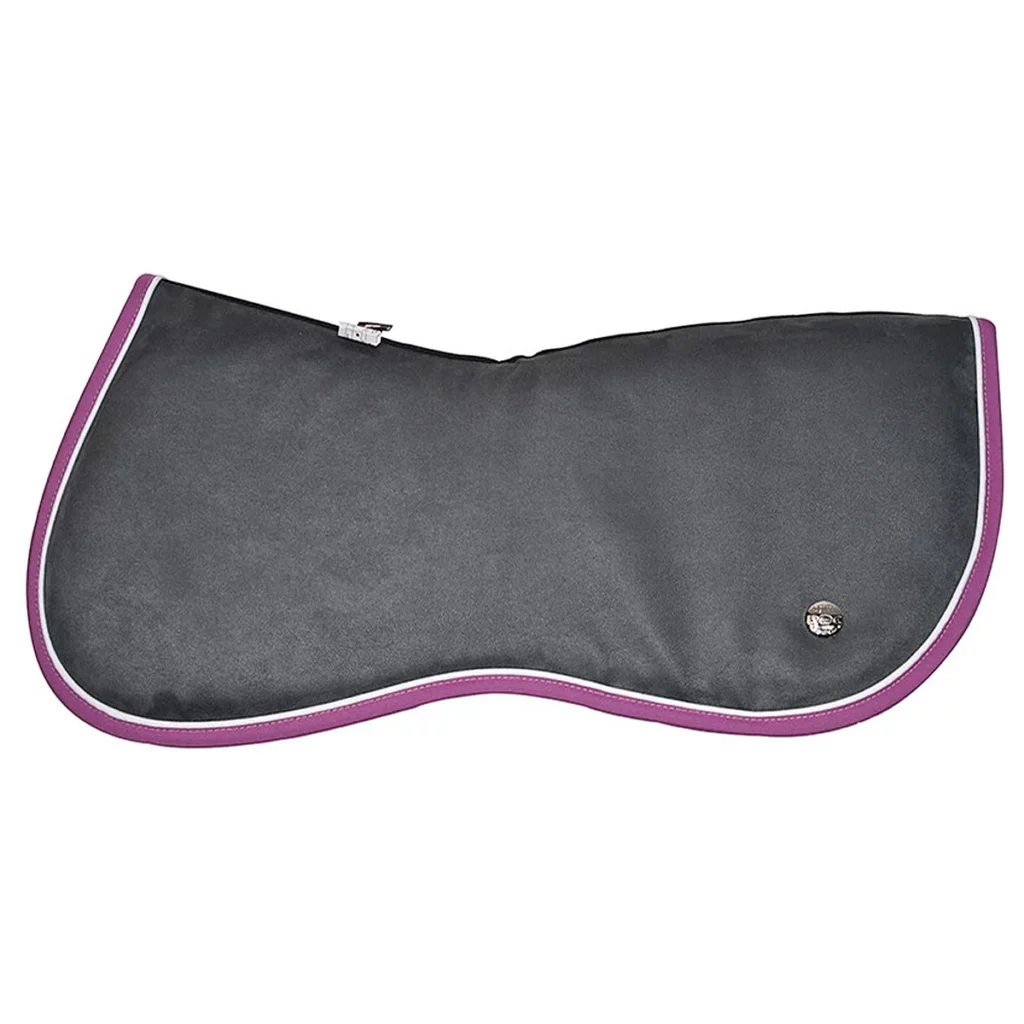
The Ogilvy Jumper Memory Foam Half Pad is designed for riders who want noticeable support and stability without overcomplicating their setup. Built with dense memory foam and Ogilvy’s signature V-shaped topline, this pad helps soften impact while encouraging even contact under the saddle—particularly useful during jumping or intensive flatwork.
Riders often reach for this pad when they want a little more cushion and security for their horse, especially if friction or minor movement has been an issue in the past. The foam responds to pressure, helping the saddle sit quietly while still allowing the horse to move freely through the back. It’s a popular choice for horses with sensitive backs or riders who school frequently and want reliable, everyday protection.
Because this pad has more structure than minimalist options, it’s important to consider overall saddle fit before adding it to your setup. If your saddle already fits snugly, the added thickness may change balance.
| Pros | Cons |
| Provides noticeable shock absorption and cushioning for flatwork and jumping | Thicker profile can change saddle fit if clearance is already snug |
| Helps stabilize the saddle and reduce friction under movement | Not intended to correct major saddle fit issues |
| Comfortable option for sensitive-backed horses and frequent schooling | May feel like “too much pad” for riders who prefer a minimalist setup |
| Durable, structured design that holds its shape ride after ride | Less adjustable than shim-based correction pads |
Rider tip
If you’re between sizes or balancing saddle fit, ride once with your usual pad, then add the Ogilvy and check: wither clearance, balance point, and panel contact. If the saddle tips or lifts, it’s telling you something.
2. Acavallo Withers Free Hexa Gel 1/2 Pad + Front Riser w/ Micropile — $210.00
Best half pad for wither relief and front-end balance
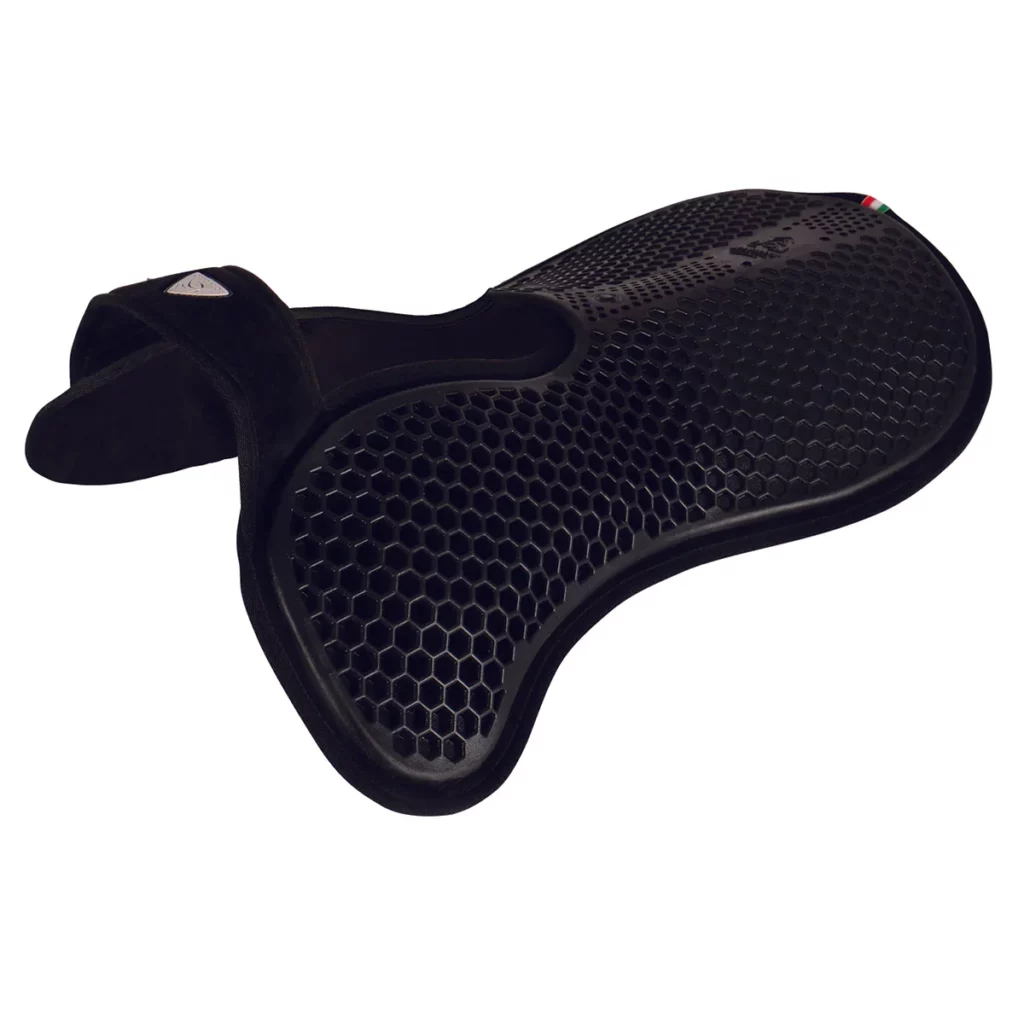
The Acavallo Withers Free Hexa Gel Half Pad is a smart choice for riders who need targeted shock absorption with added wither clearance and a subtle front lift. The hexagonal gel structure absorbs impact while helping keep the saddle stable, and the micropile lining adds comfort against the horse’s back without trapping heat.
What sets this pad apart is the built-in front riser, which can help rebalance a saddle that sits slightly low in front—often a concern for horses with prominent withers or developing toplines. Riders who jump frequently or ride rounder horses that tend to experience saddle slip often appreciate the non-slip properties of the gel.
That said, any front-rising pad should be used with intention. If your saddle already fits well, adding lift where it isn’t needed can throw off balance. This pad shines when there’s a clear reason for front support and works best when used as part of an overall fit strategy rather than a catch-all solution.
| Pros | Cons |
| Excellent shock absorption with non-slip gel construction | Front riser can overcorrect balance if not truly needed |
| Withers-free design helps relieve pressure on high-withered horses | Not ideal for saddles that already sit correctly in front |
| Micropile lining adds comfort and helps manage heat and friction | Less customizable than multi-pocket correction pads |
| Thin, close-contact feel compared to bulkier foam pads | Can mask underlying saddle fit issues if used indiscriminately |
Rider tip
Use this pad when you have a specific reason to lift the front (fitter recommendation, known balance issue, developing topline). If you’re buying it “just because,” you’re better off with a non-riser half pad first.
3. Fleeceworks Therawool Perfect Balance Halfpad with Inserts — $196.00
Best adjustable half pad for horses in training or transition
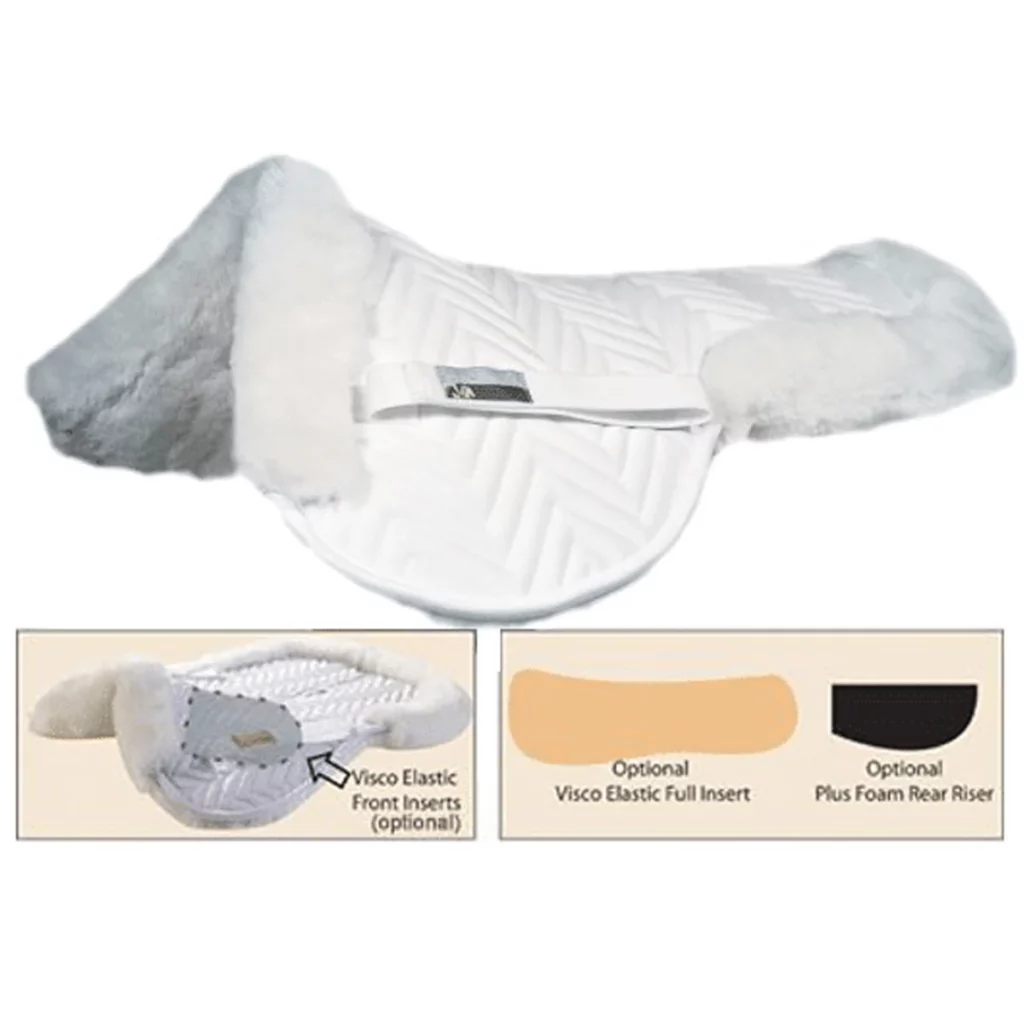
The Fleeceworks Therawool Perfect Balance Half Pad offers the comfort and pressure distribution riders love about wool, paired with the flexibility of an insert system. Made with Therawool (a washable wool blend), this pad contours nicely to the horse’s back while remaining practical for regular use.
Its defining feature is adjustability. Removable inserts allow riders to make small, thoughtful changes to balance as a horse develops muscle or returns to work after time off. This makes it especially appealing for horses in transition, where saddle fit may shift gradually rather than dramatically.
As with any insert pad, restraint is key. The goal is even contact and freedom of movement, not stacking padding to force a fit. When used conservatively, the Fleeceworks Perfect Balance pad provides a comfortable, adaptable solution that grows with the horse.
| Pros | Cons |
| Adjustable insert system allows for gradual fit changes | Easy to overuse inserts if adjustments aren’t intentional |
| Wool-like comfort with better washability and durability | Incorrect insert placement can create bridging |
| Ideal for horses developing topline or returning to work | Requires more rider awareness than non-adjustable pads |
| Contoured shape supports even contact under the saddle | Bulk increases as inserts are added |
Rider tip
If you’re using inserts, start with the minimum. Ride, reassess, then adjust one change at a time. The goal is even contact and a horse that stays soft through the back, not the thickest setup.
4. ThinLine English Perfect Fit Pad — $155.00
Best minimalist half pad for shock absorption without bulk
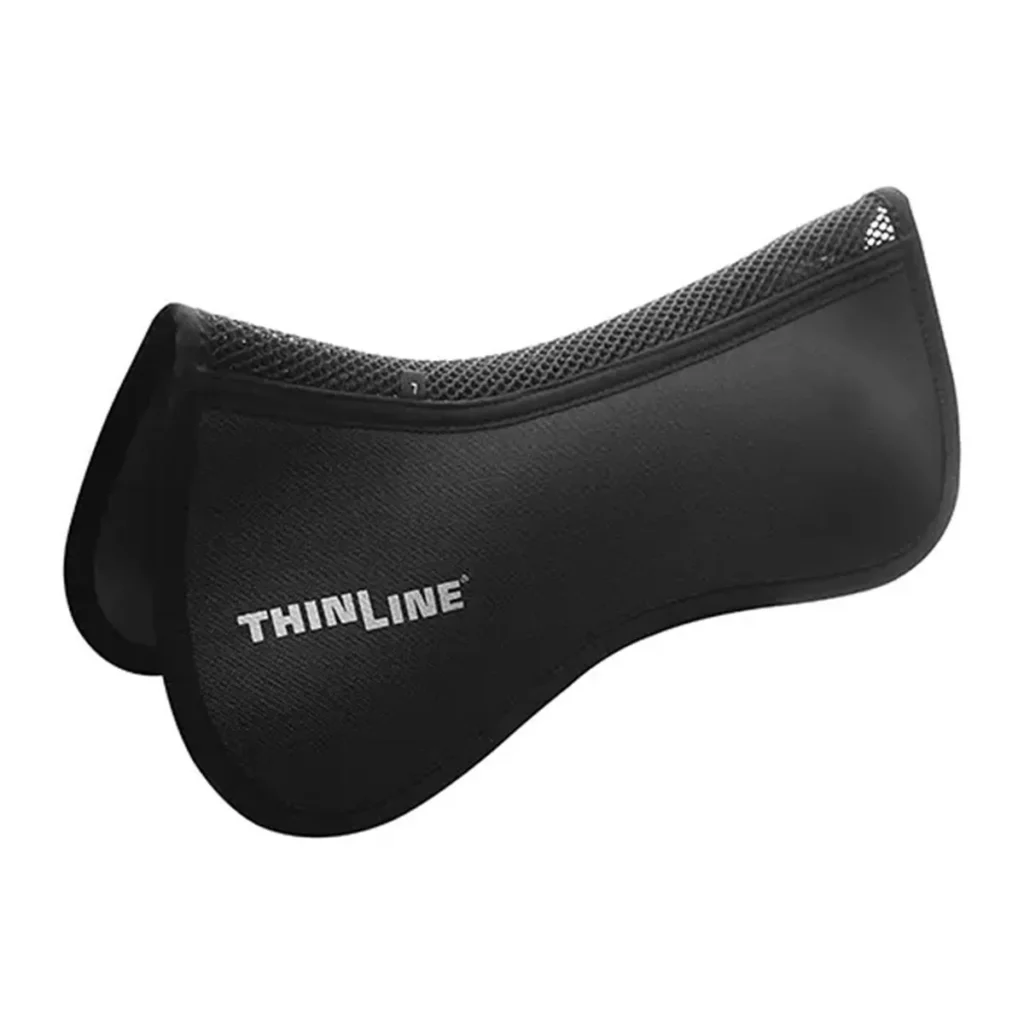
The ThinLine English Perfect Fit Pad is ideal for riders who already have a well-fitted saddle and simply want to add shock absorption without altering balance or feel. ThinLine’s open-cell foam is known for its ability to reduce concussion while remaining remarkably low-profile under the saddle.
This pad appeals to riders who dislike bulk and want consistency from ride to ride, especially when riding multiple horses in the same tack. It provides protection without muting communication, making it a favorite for disciplines where close contact matters.
Because it’s intentionally non-corrective, this pad isn’t designed to address fit issues or asymmetry. Instead, it excels as a “leave it alone but protect the back” option—perfect when your saddle is right, and your goal is longevity and comfort.
| Pros | Cons |
| Adds shock absorption without significantly altering saddle fit | Not corrective; won’t address balance or asymmetry issues |
| Extremely low-profile and close-contact | Less plush feel than wool or memory foam pads |
| Breathable design helps manage heat and pressure along the spine | Limited usefulness if saddle fit is already compromised |
| Consistent feel across multiple horses | Higher price point for a non-adjustable pad |
Rider tip
This is the pad to put under a well-fitted saddle when you want to keep your current balance and simply give your horse’s back more protection per ride.
5. ECP Quilted 4 Pocket Correction Half Pad — $59.98
Best correction half pad for fine-tuning saddle balance
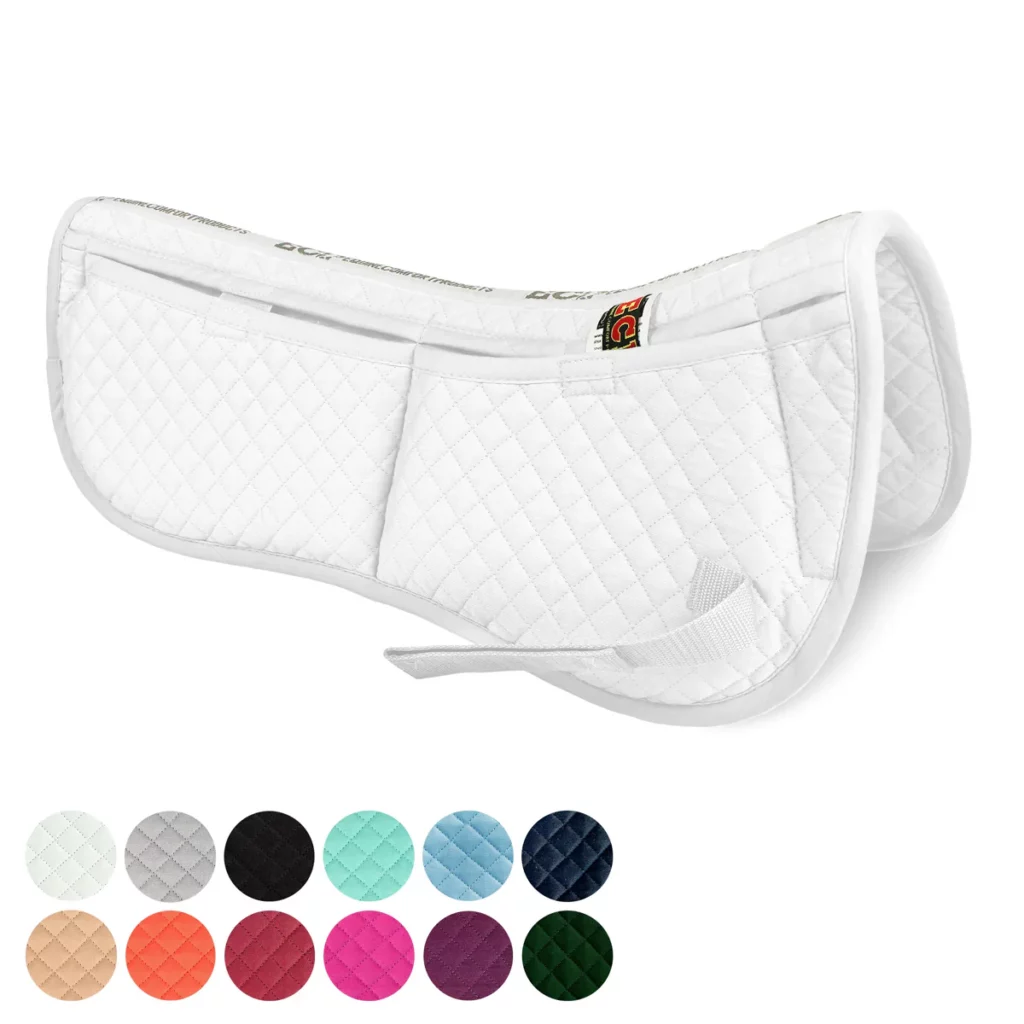
The ECP Quilted 4 Pocket Correction Half Pad is built for riders who need real adjustability. With front and rear shim pockets and multiple memory foam inserts, it allows for precise customization to help rebalance a saddle or accommodate changes in a horse’s topline.
This pad is often chosen for young horses, horses coming back into work, or situations where one saddle is being used across multiple horses. The quilted design helps keep the pad stable, while the shims offer flexibility as needs change over time.
As with all correction pads, careful use is essential. Over-shimming can create new pressure points rather than solve existing ones. When adjustments are made thoughtfully—and ideally with input from a saddle fitter—this pad can be an effective tool for maintaining comfort and balance through periods of change.
| Pros | Cons |
| Highly adjustable with front and rear shim pockets | Easy to overcorrect if too many shims are used |
| Useful for horses with changing toplines or asymmetry | Requires careful setup and ongoing reassessment |
| Allows precise balance tuning without replacing a saddle | Can feel bulky compared to minimalist pads |
| Practical option for multi-horse programs | Not a substitute for a properly fitting saddle long-term |
Rider tip
If you’re shimming, change one variable at a time, ride, then reassess. And if you’re shimming heavily to make a saddle usable, that’s your sign to book a fitter.
Frequently Asked Questions About Half Pads
Half pads raise a lot of good questions, especially when it comes to fit, comfort, and when they’re actually helpful. These are some of the most common things riders ask when deciding whether (and how) to use one.
Do half pads fix a poorly fitting saddle?
No. A half pad can help fine-tune a saddle that already fits reasonably well, but it won’t correct a saddle that’s fundamentally the wrong shape or size for the horse. In some cases, adding padding to a poor fit can actually increase pressure rather than relieve it.
Are half pads necessary for every horse?
Not necessarily. Many horses go best in a properly fitted saddle with a simple saddle pad underneath. Half pads are a tool, not a requirement, and they’re most useful when there’s a specific reason to add support, shock absorption, or minor fit adjustment.
Can a half pad change my saddle fit?
Yes. Even thin half pads can affect how a saddle sits, especially in the balance point and through the withers. Any time you add or change a half pad, it’s important to reassess saddle balance and clearance before riding.
What’s the best half pad for shock absorption?
That depends on the horse and the type of work you’re doing. Gel and memory foam pads are popular for impact reduction, while sheepskin offers natural shock absorption along with breathability. The “best” option is the one that protects your horse’s back without altering fit or feel.
Should a half pad go over or under a saddle pad?
A half pad is typically placed directly under the saddle and on top of a traditional saddle pad. This allows it to do its job—absorbing impact and managing pressure—without slipping or bunching.
Can I use a half pad every ride?
Many riders do, especially when jumping or riding frequently. As long as the half pad works with your saddle fit and your horse remains comfortable, regular use is fine. That said, it’s always smart to reassess periodically rather than assume the setup never needs adjusting.
How do I know if my horse benefits from a half pad?
Signs can include improved comfort through the back, more consistent movement, or fewer rubs and sore spots after riding. If your horse rides better with the pad than without it, and your saddle remains balanced, that’s usually a good indicator you’re on the right track.
Choosing the Right Half Pad
The best English half pad is the one that supports your horse’s comfort while preserving a balanced, well-fitting saddle. When chosen with intention, a half pad can reduce concussion, improve pressure distribution, and help your horse move more freely without masking fit issues or creating unnecessary bulk.
As with any piece of tack, the key is listening to your horse and reassessing as their body and workload change. If your saddle fits well and your horse feels better with a half pad than without it, you’re likely on the right track.
Ready to find the right half pad for your horse? You can shop our curated selection of English half pads online, or visit Farm House Tack in person for hands-on help from riders who understand saddle fit, comfort, and real-world riding needs.
You might also like: