

Ultimate English Saddle Pad Guide
Michelle DrumAn English saddle pad may seem like a simple piece of tack, but it plays a far more important role than many riders realize. Beyond protecting your saddle from sweat and wear, the right pad can influence comfort, stability, and overall performance for both horse and rider.
As modern English saddles have become more anatomically shaped and performance-focused, saddle pads have evolved right alongside them. Today’s options range from traditional square pads to highly technical, discipline-specific designs that prioritize pressure distribution, breathability, and freedom of movement.
This guide is designed to help you understand how English saddle pads work, what separates one style from another, and how to choose the best option for your horse, your saddle, and the way you ride.
What Does an English Saddle Pad Do?
An English saddle pad serves as a protective layer between the saddle and the horse’s back. A well-chosen saddle pad helps manage pressure, reduce friction, and create a more stable seat for the rider.
Protection for horse and saddle
One of the most basic but essential functions of a saddle pad is protection. Pads help shield your horse’s back from rubbing or irritation caused by saddle panels, billets, and seams. At the same time, they prevent sweat, dirt, and oils from reaching the saddle, extending the life of the leather and flocking.
Cushioning and shock absorption
Modern saddle pads often incorporate foam layers or memory foam inserts designed to absorb shock, particularly during jumping or high-impact work. This can reduce strain on your horse’s back and help prevent fatigue.
Saddle position and stability
Pads also contribute to how securely a saddle sits during movement. Features like anatomical shaping, contoured withers, and grip-enhancing materials can help minimize slipping or shifting, especially during transitions, lateral work, or over fences.
Moisture and heat management
Sweat buildup can contribute to skin irritation and soreness in your horse. Many modern English saddle pads use moisture-wicking linings and breathable fabrics to promote airflow and keep the horse’s back cooler and drier throughout the ride.
An important reminder on fit
It’s important to note that no saddle pad can “fix” a saddle that doesn’t fit correctly. Pads are meant to support an already well-fitting saddle, not compensate for pressure points or balance issues. If a horse shows signs of discomfort (soreness, uneven sweat marks, or resistance under saddle), a professional saddle fitter should always be consulted first.
Learn how to correctly saddle a horse with our guide →
Saddle Pad Materials and Construction
While shape and discipline determine how a saddle pad fits, materials and construction determine how it performs. Understanding a few key material features can help riders make smarter choices without getting lost in technical jargon.
Cushioning and support layers
Many contemporary saddle pads incorporate foam or layered padding systems to help absorb shock and distribute pressure more evenly across the horse’s back. Memory foam, in particular, adapts to movement and weight, providing dynamic support during work over fences or extended schooling sessions.
That said, more padding isn’t always better. Excessive thickness can interfere with saddle balance or restrict movement, especially if the saddle already fits snugly. The goal is support, not bulk.
Spine relief and anatomical shaping
Spine relief channels and contoured withers are now common features in higher-quality English saddle pads. These design elements help lift the pad away from the horse’s spine, reducing direct pressure along the topline and allowing for better airflow.
Anatomically shaped pads are especially beneficial for horses with prominent withers or those sensitive to pressure in the back.
Linings, breathability, and moisture management
The lining of a saddle pad plays a major role in comfort. Moisture-wicking fabrics help pull sweat away from the horse’s back, while breathable materials promote airflow and reduce heat buildup during longer or more intense rides.
For riders who school frequently or ride in warmer climates, breathable linings can make a noticeable difference in day-to-day comfort. Look for brands that offer saddle pads made with quick-drying, anti-fungal, anti-microbial linings.
Types of English Saddle Pads
While all English saddle pads serve the same basic purpose, their shape, construction, and intended use can vary significantly. Understanding the different types of pads makes it much easier to choose the right option for your horse and riding discipline.
Rather than thinking in terms of “better” or “worse,” it’s more helpful to think in terms of function. The best saddle pad is the one that works with your saddle, supports your horse’s movement, and fits the way you ride.
Square Saddle Pads
Square saddle pads are one of the most recognizable and widely used English saddle pad styles. Characterized by their rectangular shape and full panel coverage, square pads are a staple in hunter, jumper, and dressage disciplines alike.
Traditionally associated with a classic show-ring look, today’s square pads have evolved far beyond simple quilted cotton. Many now feature anatomical shaping at the withers, structured spines that prevent pressure along the topline, and performance fabrics designed to manage heat and moisture more effectively.
Square pads tend to work best when paired with close contact or jumping saddles that already fit well and don’t require additional correction. They’re also an excellent choice for riders who want a pad that transitions easily from schooling to showing.
Our recommendation:
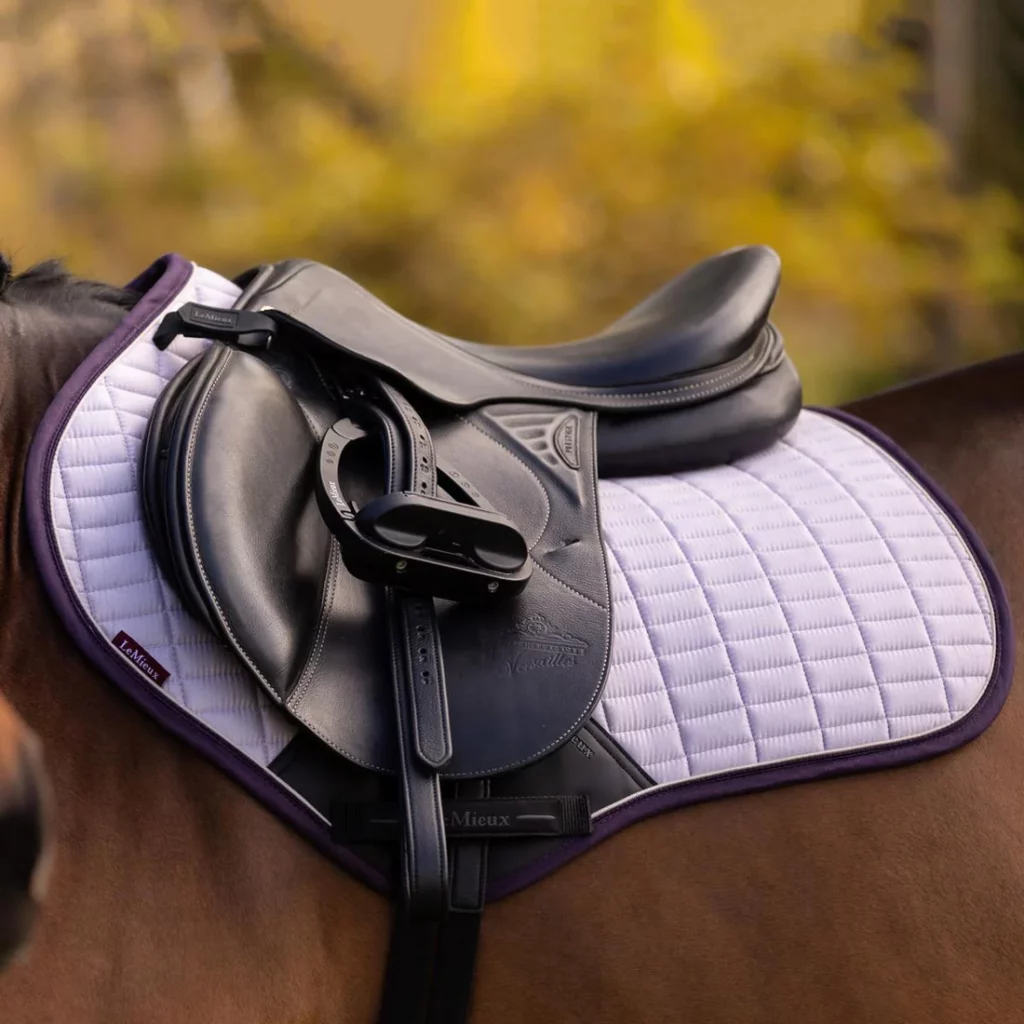
We recommend the LeMieux Suede Close Contact Square Pad because it delivers reliable performance without unnecessary bulk. Its classic square shape with a swept-back, high-wither profile fits close contact and forward-cut saddles beautifully, while the grippy suede outer helps keep the saddle stable in motion. The bamboo lining effectively manages heat and moisture, making it a comfortable choice for both schooling and show days.
Contour Saddle Pads
Contour saddle pads (or shaped pads) are designed to follow the natural lines of both the saddle and the horse’s back. Rather than offering full rectangular coverage, contour pads mirror the saddle’s profile for a streamlined, performance-focused fit.
Contour saddle pads tend to work best when paired with a well-fitting saddle that doesn’t require additional correction. They’re a strong choice for riders who prefer a modern, athletic look or want to reduce excess fabric without moving to a half pad.
While most commonly associated with jumping disciplines, contour pads are also used by dressage and multi-discipline riders who prefer a closer-contact feel and streamlined profile.
Half Saddle Pads
Half saddle pads are used in conjunction with a standard saddle pad to provide additional cushioning, shock absorption, or subtle fit adjustments. Unlike full pads, half pads sit directly under the saddle panels and are typically made from materials like memory foam, gel, or wool blends.
While often associated with horses that have specific fitting needs, half pads are increasingly used by riders looking to proactively support comfort during intense training or competition.
Half pads can enhance comfort and help fine-tune saddle balance, but they should never be used as a long-term solution for an ill-fitting saddle.
Riders often choose half pads for:
- Horses in heavy training
- Young or developing horses
- High-impact disciplines like jumping or eventing
Our recommendation:
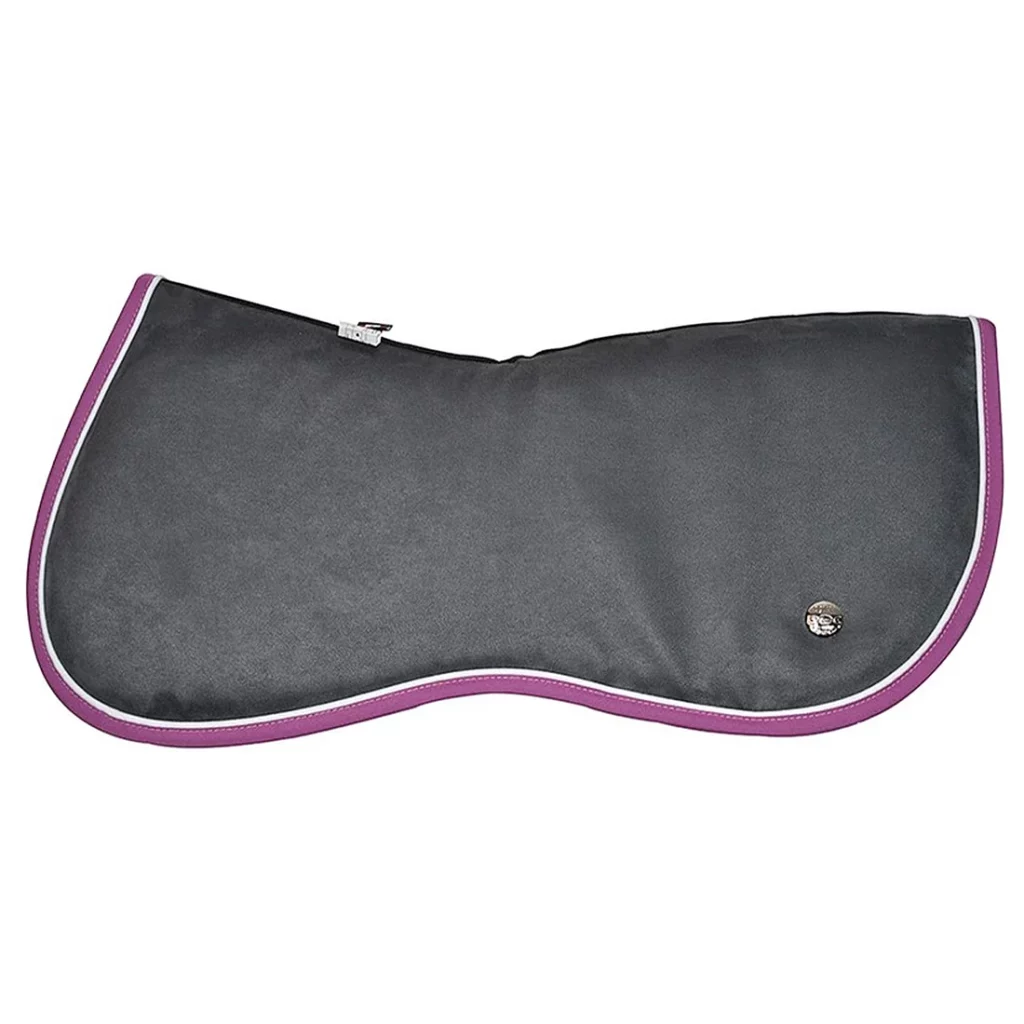
We recommend the Ogilvy Jumper Memory Foam Half Pad for jumpers and eventers all the time. The memory foam core molds with movement to help distribute pressure evenly, making it a smart choice for horses in regular work or intense jumping sessions. It enhances shock absorption without adding unnecessary bulk, helping maintain a balanced, comfortable feel for both you and your horse.
All-Purpose Saddle Pads
All-purpose saddle pads are designed to accommodate All-Purpose saddles and a variety of riding styles. While simpler in design than discipline-specific pads, they remain a practical and reliable option for many riders. All-purpose pads are easy to wash, quick to dry, and sturdy enough to handle daily riding demands.
These pads are especially common in lesson barns, schooling environments, or for riders who split their time between flatwork and jumping without specializing in one discipline.
Our recommendation:
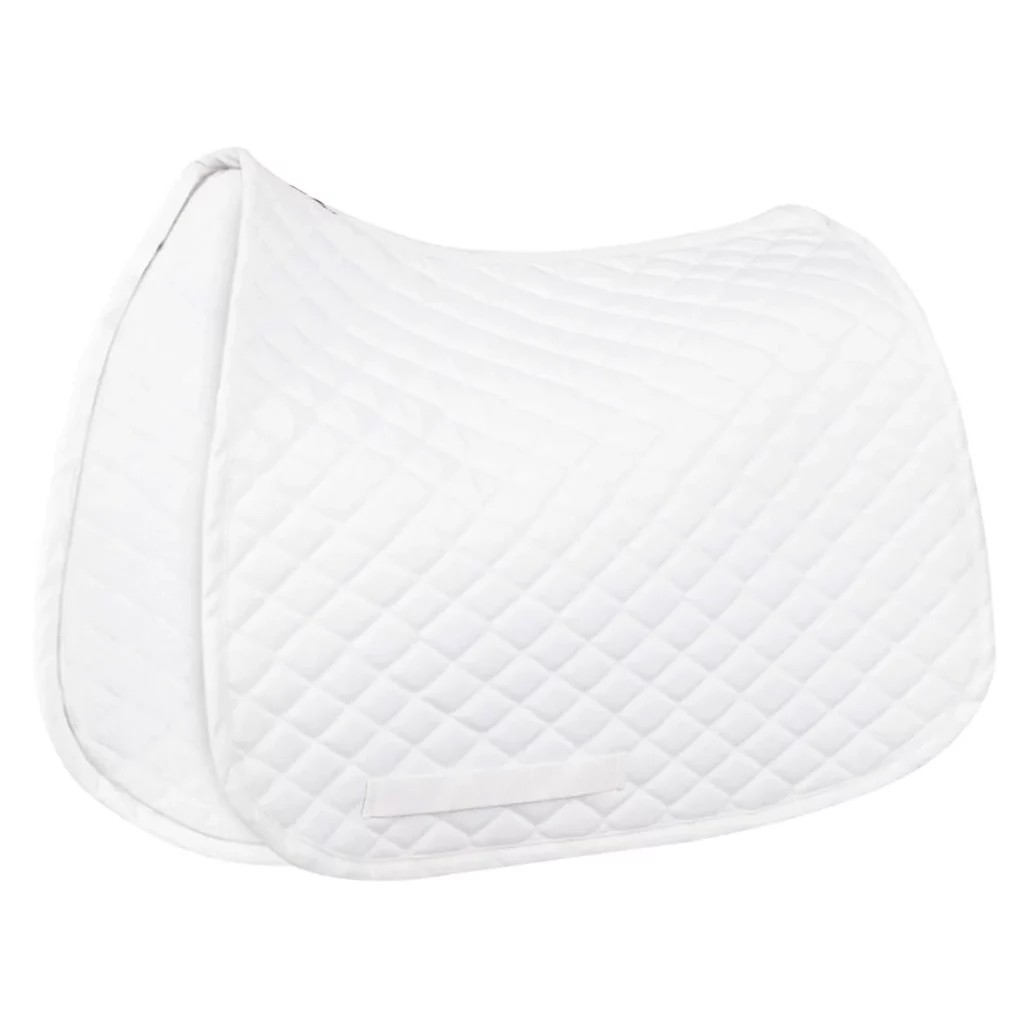
We recommend the TuffRider Basic All Purpose Saddle Pad as a reliable everyday option for riders who want straightforward comfort and durability without unnecessary frills. Its classic shape fits a wide range of saddles and disciplines, making it ideal for schooling, lessons, or casual rides. Built with easy-care materials and a practical design, it handles frequent use and washing with ease, delivering consistent performance ride after ride.
Choosing a Saddle Pad by Discipline
While saddle pad fundamentals apply across the board, discipline plays a major role in determining which style, materials, and features will work best for you and your horse. Hunters, jumpers, and event riders place different demands on their tack, and the right saddle pad should support those goals.
Rather than choosing a pad based solely on appearance or tradition, it’s worth considering how your discipline influences movement, impact, and time spent in the saddle.
Dressage Saddle Pads
Dressage saddle pads are specifically designed to accommodate the longer panels and straighter flap of a dressage saddle. Their extended shape provides full panel coverage while maintaining a clean, tailored look under the saddle.
Unlike jumping disciplines, dressage places less emphasis on impact absorption and more on balance, consistency of contact, and freedom of movement. Dressage pads are typically thinner and more structured, allowing the saddle to sit close to the horse without unnecessary bulk.
Because dressage horses often work for longer periods in collected movement, breathability and moisture management are especially important. Well-designed dressage pads feature anatomical shaping and clear spine relief to support comfort throughout extended schooling or competition rides.
What to prioritize for dressage:
- Discipline-specific shape with extended panel coverage
- Thin, structured construction
- Spine relief and breathable linings
Dressage riders sometimes choose separate pads for schooling and showing, or invest in high-quality pads that maintain their structure and appearance across both settings.
Hunter Saddle Pads
In the hunter ring, subtlety matters. Hunter saddle pads are designed to complement the horse and rider without drawing attention, maintaining a clean, traditional silhouette that aligns with classic turnout standards.
Hunter pads are typically thinner and more streamlined than their jumper counterparts. Excess bulk can disrupt saddle balance or create a less polished appearance. Instead, the focus is on even contact, stability, and a shape that sits neatly beneath the saddle panels.
Materials should lie flat and hold their structure over time, especially after repeated washing. Anatomical shaping at the withers is increasingly common, helping reduce pressure without altering the saddle’s fit.
Our recommendation:
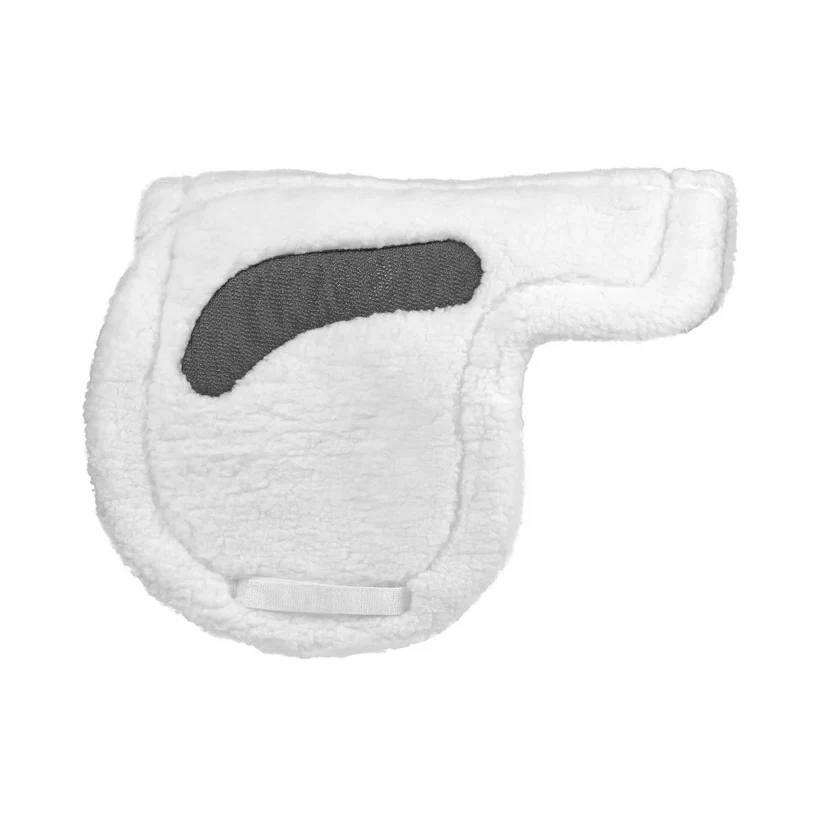
We recommend the Equifit Essential Hunter Pad for riders who want a refined, performance-focused foundation under saddle that still honors classic hunter turnout. The cut and structured design help promote even pressure distribution, while breathable materials and contouring support comfort during both schooling and show days.
Jumper Saddle Pads
Jumping places greater physical demands on the horse’s back, especially during repeated efforts, tight turns, and powerful takeoffs. As a result, jumper saddle pads often emphasize shock absorption, stability, and breathability.
Jumper pads are often shaped or close contact in design to reduce bulk and allow for closer communication between horse and rider. Materials that offer grip or anti-slip properties can help keep the saddle stable during dynamic movement.
Padding and construction are also very important. Many jumpers opt for pads with reinforced spine channels and supportive foam layers that help manage pressure during high-impact work.
Our recommendation:
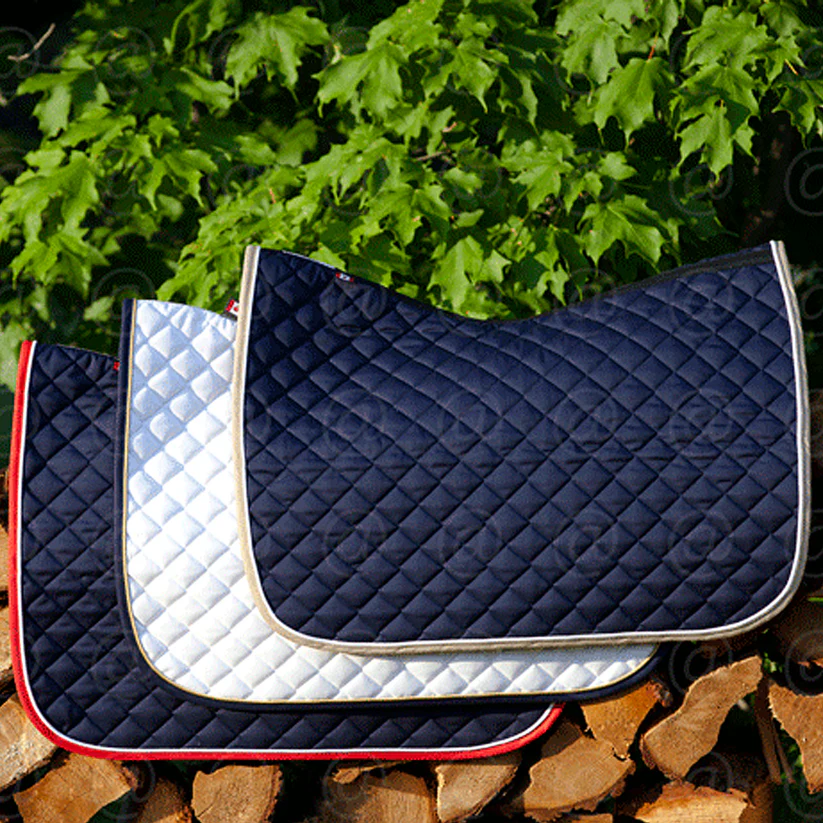
We recommend the Ogilvy Jumper Baby Pad for riders who want a performance-ready pad. The unique V-top shape of this pad helps reduce friction, while its contoured shape supports close contact and freedom of movement, providing effective pressure distribution during jumping and dynamic flatwork.
Eventing and Multi-Discipline Saddle Pads
Event riders and riders who cross-train regularly need saddle pads that can do it all. From flatwork and conditioning rides to jumping schools and competitions, versatility is key.
Saddle pads for eventing and multi-discipline use should hold their shape ride after ride, even with frequent washing. Breathable linings and moisture-wicking fabrics help keep horses comfortable during longer sessions, while thoughtful construction prevents shifting during varied movement.
Many riders in this category gravitate toward shaped or square pads with performance linings, occasionally pairing them with half pads for added support during intense jumping phases.
A Note on All-Purpose Pads Across Disciplines
All-purpose saddle pads remain a practical option for riders who split their time between disciplines or ride multiple horses with different needs. While they may not offer the same level of specialization as discipline-specific pads, a well-made All-Purpose pad can serve reliably in many scenarios—especially for schooling, lessons, and casual riding.
Custom and Specialty Saddle Pads
Premium and custom saddle pads are designed to address specific comfort, fit, and performance needs that standard pads may not fully support.
Not every horse requires a premium or specialty pad, and many horses perform beautifully in well-made standard pads. However, premium and custom options can be especially valuable for:
- Horses with sensitive backs or conformation challenges
- Riders training or competing at higher levels
- Horses in heavy or frequent work
- Riders seeking long-term durability and adaptability
Some common types of specialty saddle pads include:
Sheepskin and Wool Pads
Sheepskin and wool-lined saddle pads have long been valued for their natural cushioning and breathability. Sheepskin pads are commonly used on their own or paired with half pads, particularly in jumping and eventing disciplines. Genuine sheepskin fibers help regulate temperature, wick moisture away from the skin, and distribute pressure more evenly across the horse’s back.
These pads are especially popular for horses with sensitive skin, those prone to rubbing, or riders looking for a natural material that performs well in both warm and cool conditions. While they do require more care, many riders find the comfort benefits well worth the extra effort.
Wither Relief and High-Wither Pads
Horses with prominent withers or more angular toplines often benefit from pads designed specifically to relieve pressure in that area. Wither relief pads feature a contoured shape or built-up clearance at the front, helping lift the pad away from the withers and prevent rubbing.
These pads can be especially useful during periods of growth, conditioning changes, or seasonal muscle fluctuation, when a saddle’s fit may feel slightly different from week to week.
Riser and Correction Pads
Riser and correction pads are designed to make subtle adjustments to saddle balance by adding lift at the front, back, or both. Rather than a one-size-fits-all approach, many modern correction pads use removable shims or layered inserts that allow riders to fine-tune fit as needed.
These pads are commonly used for:
- Horses building or losing topline
- Young horses still developing
- Temporary asymmetry or muscle changes
It’s important to use riser and correction pads thoughtfully and in consultation with a saddle fitter. While they can be extremely helpful, improper use can create new pressure points rather than solving existing ones.
Memory Foam and Custom Half Pads
Memory foam half pads are among the most popular premium options in modern English riding. These pads mold to the horse’s back under heat and pressure, helping distribute weight dynamically throughout the ride.
Custom half pads take this a step further by allowing riders to tailor materials, thickness, and shape to their horse’s specific needs. For horses in intense training or riders competing regularly, a well-designed custom half pad can provide consistent comfort ride after ride.
Caring for Your English Saddle Pad
Proper care not only extends the life of your saddle pads, but also helps protect your horse’s comfort and skin health. Sweat, dirt, and hair can break down materials over time, so regular maintenance is an important part of any tack routine.
How often to wash saddle pads
Most saddle pads should be washed frequently, especially those used for schooling or intense work. Pads that stay damp or dirty between rides can harbor bacteria and contribute to skin irritation or soreness.
As a general rule:
- Schooling pads may need washing every few rides
- Show pads can often be washed less frequently, depending on use
- Pads used on sensitive horses should be kept especially clean
How to wash a saddle pad
Always follow the manufacturer’s care instructions, especially for pads made with memory foam, wool, or technical performance linings.
- Before washing, shake out your saddle pad to remove excess hair and debris.
- Use a mild detergent and wash on a gentle cycle with cool or lukewarm water to help maintain the pad’s structure.
- Avoid fabric softeners or strong detergents, as they can interfere with moisture-wicking properties and reduce the effectiveness of performance materials.
- Secure straps or tabs before washing to help prevent twisting or unnecessary wear in the washing machine.
Drying and storage
Proper drying and storage are just as important as washing when it comes to preserving the lifespan of a saddle pad. Pads should always be allowed to dry completely between uses to prevent bacteria growth and lingering odors.
Air drying is recommended for most saddle pads, as high heat can damage foam inserts, wool fibers, and technical fabrics. Once dry, pads should be stored flat or on a saddle pad rack to help maintain their shape and structure. Avoid folding or compressing pads for extended periods, as this can lead to uneven padding and reduced performance over time.
When should you replace your saddle pad?
Even high-quality saddle pads have a lifespan. Over time, materials can compress and lose their ability to provide consistent support.
Signs it may be time to replace your saddle pad:
- Flattened or uneven padding
- Loss of structure or shape
- Persistent slipping or bunching
- Reduced shock absorption
- Strong odor even after washing
Special care for premium and specialty pads
Pads made with sheepskin, wool, or memory foam may require extra attention. Use specialized cleaners when recommended, and avoid over-washing unless necessary to preserve performance materials.
Choosing the Right English Saddle Pad
Choosing the right English saddle pad doesn’t have to be complicated. The right pad supports your horse’s comfort, protects your saddle, and works with your discipline and riding goals.
Pay attention to fit, materials, and how your pad assumes wear over time. Listen to your horse, trust what you feel in the saddle, and don’t be afraid to invest in quality where it counts. A good saddle pad is one of those pieces of tack you rely on every ride, whether you’re schooling at home, heading to a show, or squeezing in a quick hack after work.
If you ever have questions, we’re here to help. Explore Farm House Tack’s selection of English saddle pads and find the right match for you and your horse!
Learn more:
1 comment
How do you clean a saddle pad? It is very difficult to get the hair off the back of the pad. I’ve brushed, vacuum and tried to Currie. Putting them in the wash causes a mess in the machine.