

Summer Horse Care Essentials: Sunscreen, Fly Spray & Fly Gear Picks Riders Trust
Farm HouseSummer riding has a very specific personality.
It is sunscreen in your eyes, fly spray on your arms, a horse who somehow removes one fly boot before breakfast, and the quiet confidence that this time your fly mask will survive turnout.
So instead of guessing what riders are using, we asked.
We asked real riders what sunscreen, fly spray, and fly gear they actually reach for during hot, humid, buggy barn days. Their answers were honest, practical, and very familiar to anyone who has ever gone to the barn for “just a quick ride” and somehow stayed outside for four hours.
Some riders had favorite sunscreens that hold up through sweat. Others had strong opinions about fly spray residue. Several talked about sensitive horses, belly protection, fly masks, fly sheets, and the tiny design details that make fly gear either worth every penny or absolutely not worth the tack trunk space.
This guide is based on feedback from real riders in our community, not just a generic product list. Some products mentioned are rider recommendations and may not be sold by us, but we included them because they came up in the conversation.
Here are the summer horse care essentials riders actually use when the sun is strong and the flies are relentless.
Sunscreen for Horseback Riding: SPF That Can Handle Barn Life
Riders spend a lot of time in the sun, even on days that start as “just a quick barn trip.”
Grooming, riding, bathing, hand grazing, cleaning tack, filling water buckets, holding horses for the farrier, standing by the ring, and wandering back into the barn because you forgot one thing can easily turn into hours outside.
That is why sunscreen is one of the most important summer essentials for riders.
But barn sunscreen has to work harder than everyday sunscreen. Riders need SPF that can handle sweat, dust, helmet wear, long hours outside, and the kind of humidity that makes you question every life choice that led you to tacking up at 2 p.m.
If it feels greasy, runs into your eyes, tastes terrible, or feels heavy under a helmet, it probably will not become part of your routine.
Sunscreens Riders Mentioned
Here are the sunscreen options riders brought up, plus what made each one stand out in the conversation.
La Roche-Posay
Mentioned for: daily barn wear, sweaty rides, and a lighter feel
La Roche-Posay came up more than once, including mentions of Anthelios Clear Skin Dry Touch SPF 60 and UVMune 400. Riders talked about it as a daily sunscreen option for hot barn days, especially when they wanted something that felt lighter on the skin and more comfortable under a helmet.
This is the kind of sunscreen riders seemed to reach for when they wanted reliable sun protection without feeling like they had a heavy layer sitting on their face all day.
Colorescience
Mentioned for: long outdoor days, barn-to-water days, and staying power
Colorescience was mentioned as an option that works well for both barn days and water sports, which honestly makes sense. If something can handle heat, sweat, and water, riders are going to pay attention.
For riders spending long hours outside, especially during summer shows, lessons, or full barn days, this came up as a more polished sunscreen option that still feels practical for real life.
Supergoop Matte Screen and Supergoop Lip SPF
Mentioned for: riders who do not want shine, grease, or a heavy sunscreen feel
Supergoop Matte Screen came up for riders who do not want a shiny or greasy finish. That matters at the barn because nobody wants sunscreen sliding around under a helmet or mixing with dust and sweat before they even get on.
Supergoop SPF lip balm was also mentioned, which brings us to an underrated barn essential: lip SPF. If it is easy to keep in your bag and easy to reapply, riders are much more likely to actually use it.
CeraVe Sunscreen
Mentioned for: everyday use, accessible skincare, and keeping things simple
CeraVe was mentioned as an everyday sunscreen option. For a lot of riders, the best sunscreen is not the fanciest one. It is the one they can keep using consistently.
This is a good reminder that a practical sunscreen you will actually put on before heading to the barn is more useful than an expensive one that stays at home on the bathroom counter.
Equestrian Wellness Organic Sunscreen
Mentioned for: riders looking for an equestrian-friendly SPF option
Equestrian Wellness Organic Sunscreen was also mentioned by riders, and it fits naturally into this conversation because it is a sunscreen made for the kind of outdoor lifestyle riders know well.
For barn days, riders are not just thinking about SPF. They are thinking about sweat, dust, helmet wear, reapplication, and whether a product feels realistic to keep in a barn bag or show tote.
Shop Equestrian Wellness Organic Sunscreen
Zinc SPF Sticks and Tallow-Based Sunscreen Options
Mentioned for: targeted coverage, touch-ups, and high-exposure areas
Riders also brought up zinc SPF sticks and tallow-based sunscreen options. Zinc sticks can be useful for high-exposure areas like the nose, cheeks, ears, shoulders, and chest.
These are not always the products riders use all over, but they can be helpful for touch-ups and targeted protection. They are especially easy to toss in a barn bag, tack trunk, or show tote for reapplying throughout the day.
What Riders Look for in Barn Sunscreen
FThe biggest sunscreen takeaway was not that every rider uses the same product.
It was this: riders want sunscreen they will actually wear and reapply.
For horseback riding and barn days, riders tend to look for sunscreen that is:
- Broad-spectrum
- Sweat-resistant or water-resistant
- Comfortable under a helmet
- Lightweight or non-greasy
- Easy to reapply
- Practical enough to keep in a barn bag, tack trunk, truck, or show bag
A dry-touch sunscreen can be helpful for riders who do not want a shiny finish. A zinc stick can be useful for smaller, high-exposure areas. A sport or water-resistant formula may make sense for long, sweaty barn days.
But the most important thing is choosing something you will actually use.
Because the sunscreen sitting unopened in your car is not doing anything except slowly roasting next to your iced coffee.hiny finish. A zinc stick can be useful for high-exposure areas like the nose, cheeks, ears, shoulders, and chest. For long barn days, the best sunscreen is usually the one you will actually use more than once.
Lip SPF: The Small Summer Essential Riders Should Not Skip
Lip SPF deserves a permanent place in every barn bag.
Lips are easy to forget until they are already burned, dry, cracked, or uncomfortable. Riders in our community specifically mentioned SPF lip products, including Sun Bum, Cay Skin, Prequel, Supergoop, and other SPF balm options.
The key is convenience.
Riders are more likely to use lip SPF when it feels good, is easy to reapply, and is kept somewhere obvious. Keep one in your barn bag, one in your car, and one in your show bag.
Is that excessive?
Maybe.
Will you still somehow lose all three?0
Also maybe.
For daily barn use, a simple lip balm like Effol Lip Care Stick is an easy tack trunk add-on for riders who want to keep lip care close by during long summer days.
Fly Spray for Horses: What Riders Actually Care About
Fly spray is one of the most talked-about summer horse care products, and riders have opinions.
Strong opinions.
Some riders want the strongest fly spray they can find. Some want something gentler for sensitive horses. Some care most about how long it lasts. Others are focused on whether it leaves oily residue, wet patches, flakes, or buildup on the coat.
In rider feedback, products and brands mentioned included:
- Pyranha
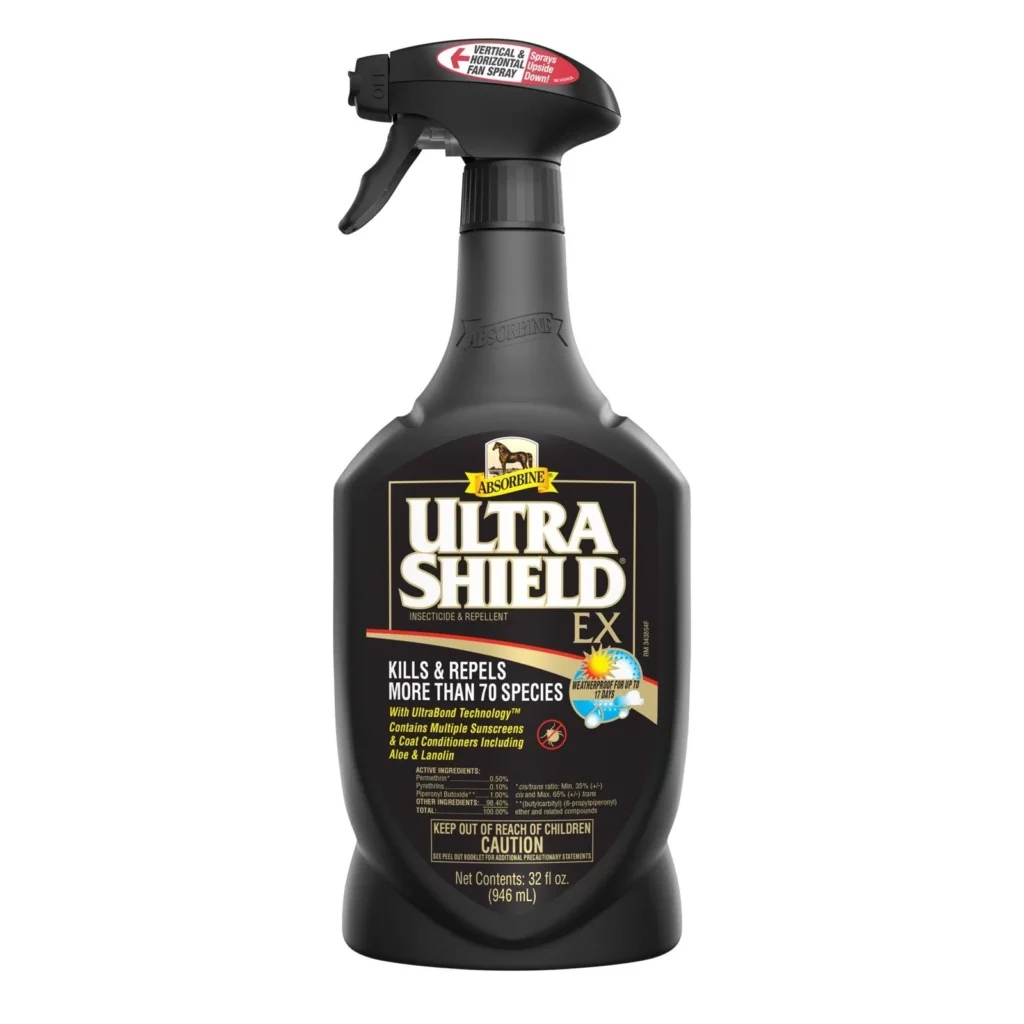
- Absorbine UltraShield
- Endure
- Tri-Tec
- Whole Horse Equine
- Shapley’s
- Ecovet
- E3
- Equiderma
- Fly Bye
- One Touch
- Purely Equines
What stood out most was that riders were not only asking, “Does it work?”
They were also asking:
- Does it leave residue?
- Does it irritate sensitive skin?
- Does it last through a hot barn day?
- Is it better for turnout, riding, or horse shows?
- Does it leave the coat greasy?
- Is it easy to apply?
- Does my horse tolerate it?
That is why choosing the best fly spray for horses is not always about finding one perfect bottle. It is about choosing the right fly spray for your horse, your barn routine, your local fly pressure, and the kind of day you are preparing for.
A quick ride is different from turnout.
Turnout is different from a horse show.
A sensitive-skinned horse is different from the horse who seems completely unbothered by everything except the one leaf blowing across the arena.
If your fly spray shelf is looking a little too empty for peak bug season, we’ve got options for daily barn use, turnout, horse shows, and fly-sensitive horses.
Browse horse fly spray, fly masks for horses, and summer fly protection essentials here: Shop horse fly spray and fly masks at Farm House Tack
The Honest Fly Spray Conversation: Effectiveness vs. Residue
One of the clearest themes from riders was residue.
Some riders said certain fly sprays worked well but left an oily feel. Pyranha was mentioned as a product riders use, but oily residue was also part of the conversation. Absorbine UltraShield Black was another familiar product mentioned by riders, with some still liking it and others feeling it had not worked as well for them in recent years.
That is exactly why real rider feedback is useful.
A fly spray can work and still have drawbacks.
A stronger spray may be worth it for one horse but not ideal for another. A lighter spray may feel better for daily use but may need more frequent application. A product that works beautifully at one barn may not feel as effective in another region, during another month, or for another horse.
When shopping for fly spray, think about what matters most for your horse:
- Maximum fly control
- Sensitive-skin tolerance
- Less residue
- Longer-lasting protection
- Show-day coat appearance
- Daily turnout use
- Easy application
There may not be one perfect fly spray for every horse, but there is usually a better fit for each situation.
Looking for the best horse fly spray for your summer barn routine? Start with what matters most for your horse, whether that is daily turnout, horse shows, sensitive skin, less residue, or a more natural fly spray formula.
- Shop Absorbine UltraShield fly spray
- Shop Enviro Equine All Natural Fly Spray Plus
- Shop Farnam Nature’s Defense Fly Repellent Spray
- Shop all horse fly spray options
Fly Spray for Sensitive Horses
Sensitive horses need extra thought during fly season.
Some horses tolerate stronger sprays without any problem. Others may become flaky, itchy, irritated, or uncomfortable with repeated use. Rider feedback specifically pointed out that some horses do not do well with heavier or oil-based sprays, especially when they are used daily.
For sensitive horses, fly spray may work best as part of a larger fly protection routine. Instead of relying only on spray, consider pairing a gentler formula with physical protection like a fly mask, fly sheet, or fly boots.
Tips for Sensitive Horses
Patch test new fly sprays before applying them all over. Avoid spraying irritated or broken skin unless the product label says it is safe. Use a cloth, sponge, or mitt around the face instead of spraying directly. Watch your horse’s skin after repeated use, not just after the first application.
A product your horse tolerates well may be more useful than a stronger product that causes irritation.
That is not glamorous advice, but it is very real barn advice.
For sensitive horses, fly spray works best as part of a full summer fly protection routine. A well-fitting fly mask, breathable fly sheet, or added turnout fly protection can help reduce irritation when bugs are at their worst.
Browse fly masks, fly sheets, and sensitive horse fly protection
Fly Spray Application: Spray, Wipe, Brush, or Aerosol?
Application matters more than many riders realize.
Not every horse likes being sprayed. Not every fly spray applies the same way. And not every situation calls for the same method.
Some riders spray the body directly but use a cloth or hand application for the face. Others like wipes for more control. Aerosol sprays can be useful for quick, even coverage. One rider mentioned using a brush to apply fly spray more evenly.
That is a practical summer barn tip because application can change how well the product covers the horse, how much product gets wasted, and how comfortable the process is for the horse.
Fly Spray Application Tips
Always follow the product label. Apply evenly to areas where flies gather most, including the legs, belly, chest, neck, and under the jaw. Use a cloth or sponge for the face instead of spraying directly. Let the product dry when the label recommends it before tacking up or turning out.
And if your horse acts like the spray bottle is a monster from another dimension, you are not alone.
Some horses are simply wipe-on application horses. We do not make the rules.
For riders who prefer more control during application, especially around sensitive areas, Pyranha Wipe ’N Spray is a familiar fly spray option that can be sprayed or wiped on depending on your horse and your routine.

Fly Gear for Horses: When Spray Is Not Enough
Fly spray helps, but some horses need more protection than spray alone.
That is where fly gear comes in.
Riders mentioned fly masks, fly sheets, fly boots, and specific fly sheet features as important parts of summer horse care. Shires fly masks and Shires fly sheet styles were specifically mentioned in rider feedback. Riders also talked about fly sheet design details like belly protection, double overlapping Velcro chest closures, and hardware placement.
Fly gear can be especially helpful for horses that are:
- Sensitive to bugs
- Turned out during peak fly season
- Prone to rubbing
- Bothered by flies around the face
- Stomping because of flies around the legs
- Kicking at their belly when bugs are bad
A good summer fly routine usually is not one product. It is a system.
Spray helps.
Masks help.
Sheets help.
Barn management helps.
Fans help.
Picking manure helps, even though nobody is thrilled about that being part of the answer.

For horses who need extra coverage during peak bug season, a good fly mask, breathable fly sheet, or added turnout fly protection can make summer days a lot more manageable.
Shop fly sheets, fly masks, and summer fly gear
Fly Masks for Horses: A Simple Summer Essential
A fly mask is one of the simplest ways to help protect your horse from bugs.
Fly masks help shield the eyes and face, which are two areas flies love. They can be especially useful for horses that get watery eyes, rub their faces, or become irritated when bugs gather around the eyes and ears.
When choosing a fly mask, fit matters most. A good fly mask should stay securely in place without pressing into the eyes or rubbing the cheeks, jaw, or ears.
What to Look for in a Fly Mask
Look for:
Structured material that stays away from the eyes
Soft edges to help prevent rubbing
Secure closures
Breathable fabric
Ear coverage, if your horse needs it
Nose coverage, if your horse needs extra protection
A shape that fits your horse’s face
Some horses need ears. Some need a nose flap. Some need a tougher turnout mask. Some need a softer mask because they rub everything like it personally offended them.
The best fly mask is the one that fits your horse, stays on, and does not create a new problem while solving the fly problem.
If your horse needs extra face, eye, ear, or nose coverage this summer, browse our fly mask options here:
Fly Sheets for Horses: The Details Riders Notice
Fly sheets are not all the same.
Riders specifically talked about features like belly protection and chest closures. One rider liked double overlapping Velcro chest closures because they can help keep the front of the sheet secure and reduce pulling or rubbing. Belly protection was also mentioned as an important feature for horses that kick at their stomachs when flies are bad.
That kind of feedback is useful because it goes beyond “buy a fly sheet.” It helps riders understand what to look for before they choose one.
A good fly sheet should be breathable, secure, and comfortable enough for daily use. It should not trap too much heat, shift sideways, rub the shoulders, or catch easily on fencing, hay nets, buckets, or stall hardware.
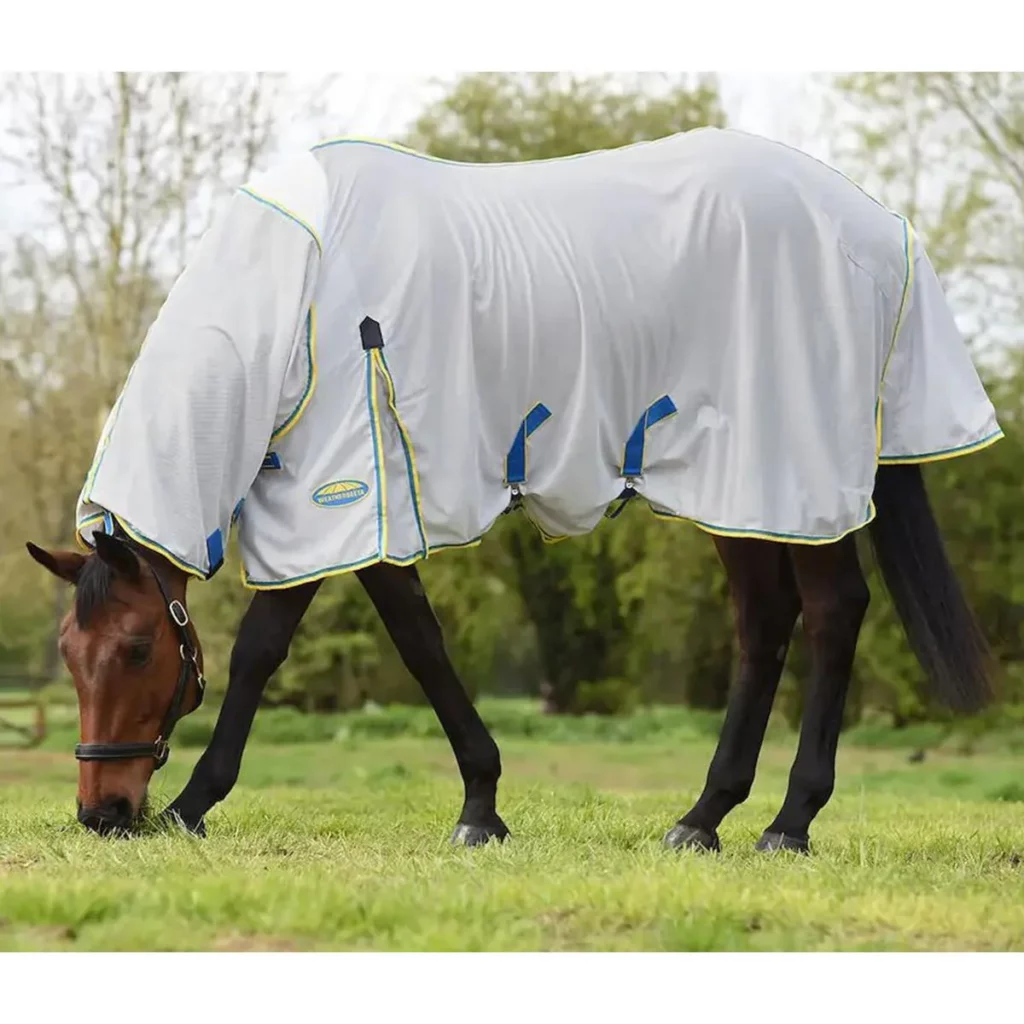
A fly sheet like the WeatherBeeta ComFiTec Zephyr Plus Mesh Combo Neck Fly Sheet is a good visual example of the kind of summer turnout coverage riders tend to look for: breathable mesh, neck coverage, secure front closures, belly coverage, and a fit designed for turnout.
Fly Sheet Features Worth Considering
Look for:
- Breathable fabric
- Secure chest closures
- Belly coverage
- Shoulder freedom
- Soft edges
- Safe hardware placement
- A fit that stays in place during turnout
More coverage is not automatically better if the sheet does not fit well. The best fly sheet is the one that protects your horse while staying comfortable and secure.
Because if the sheet is twisted sideways by noon, the horse has made a very clear review.
Shop fly sheets and turnout fly protection
A Realistic Summer Sun and Fly Routine
A good summer routine does not have to be complicated, but it should be realistic.
For riders, that means sunscreen you will actually wear, lip SPF you can find when you need it, and sun-protective riding clothes when you know you will be outside for hours.
For horses, that means fly spray that fits your horse’s needs, fly gear that fits correctly, and a barn routine that helps reduce bugs before they become everyone’s whole personality.
A realistic summer setup might look like this:
- Apply sunscreen before heading to the barn
- Keep lip SPF in your barn bag or show bag
- Wear a lightweight sun shirt on long outdoor days
- Spray or wipe your horse before turnout or riding
- Use a fly mask for turnout
- Add a fly sheet or fly boots if your horse needs more coverage
- Use a cloth, sponge, or brush for tricky application areas
- Check fly gear daily for rubs, broken straps, or creative horse damage
Because yes, some horses do seem to view fly masks as a daily puzzle.
Download the Summer Sun & Fly Protection Checklist
Want an easy way to make sure you have the basics covered before your next hot, buggy barn day?
We created a printable Summer Sun & Fly Protection Checklist inspired by the products and tips real riders shared with us. Use it before horse shows, turnout prep, travel days, or long summer barn days when the sun is strong and the flies are out in full force.

Download the Printable Checklist:
You can save it to your phone, print it for your tack room, or keep a copy in your trailer so you always have your summer sun and fly protection basics covered.
Summer Sun & Fly Protection Checklist
For the Rider
☐ Sunscreen
☐ Lip SPF
☐ Hat or visor
☐ Sunglasses
☐ Lightweight sun shirt
☐ Travel-size SPF for your tack trunk, car, or show bag
For the Horse
☐ Fly spray
☐ Cloth or wipes for face application
☐ Fly mask
☐ Fly sheet
☐ Fly boots, if needed
☐ Sensitive-skin fly spray option, if needed
Helpful Extras
☐ Soft cloth or sponge for applying fly spray around the face
☐ Grooming brush for more even fly spray coverage
☐ Backup fly mask
☐ Belly-band fly sheet for horses bothered by flies under the stomach
☐ Extra fly spray for shows, turnout, or travel days
Frequently Asked Questions About Summer Horse Care Essentials
What sunscreen is best for horseback riding?
The best sunscreen for horseback riding is one you will actually wear and reapply. Riders often look for broad-spectrum, sweat-resistant, water-resistant, lightweight, or dry-touch formulas that feel comfortable under a helmet.
Do riders need lip SPF at the barn?
Yes. Lip SPF is easy to forget, but riders spend hours outside during summer barn days. Keeping SPF lip balm in your barn bag, car, or show bag makes it easier to reapply.
What is the best fly spray for horses?
The best fly spray depends on your horse, your fly pressure, and your routine. Some riders prioritize strength, while others care more about sensitive skin, low residue, smell, or how long the spray lasts.
Why does some fly spray leave oily residue?
Some fly sprays have formulas that leave more of a coating on the hair. Riders may like the effectiveness but dislike the greasy feel, buildup, or show-day appearance. Always follow the label and choose a product that fits your horse’s needs.
What fly gear does my horse need?
Many horses benefit from a fly mask, and some also need a fly sheet or fly boots. Sensitive horses, horses turned out during heavy fly season, and horses that stomp, rub, or kick at their bellies may need more coverage.
What should I look for in a fly sheet?
Look for breathable fabric, secure chest closures, belly coverage, shoulder freedom, soft edges, and hardware that is less likely to catch. Fit is just as important as coverage.
Final Thoughts: Build a Summer Sun & Fly Kit That Actually Works
Summer barn days are always going to come with sweat, sun, and bugs.
But the right setup can make the season easier for both horse and rider.
Based on feedback from real riders, the most useful summer horse care essentials are not complicated. Riders want sunscreen they will actually reapply, fly spray that fits their horse’s needs, and fly gear that protects without rubbing, slipping, or causing more problems.
Start with the basics: sunscreen, lip SPF, fly spray, a fly mask, and fly gear that matches your horse’s turnout routine. From there, adjust based on your horse’s skin, your local fly pressure, and how much time you spend outside.
Hot, humid, buggy barn days are not going anywhere.
But with the right sunscreen, the right fly spray, and a few rider-approved fly gear favorites, they can be a whole lot more manageable.
Ready to update your summer setup?
Shop horse fly spray
Shop fly sheets, fly masks, and summer fly gear
Shop equestrian sun shirts